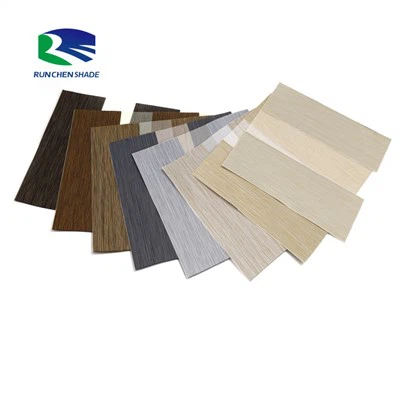
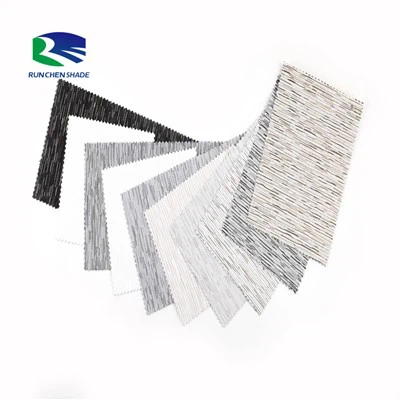
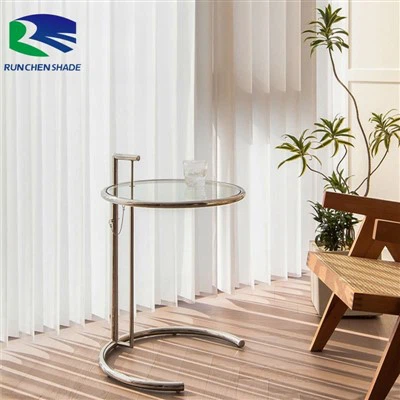
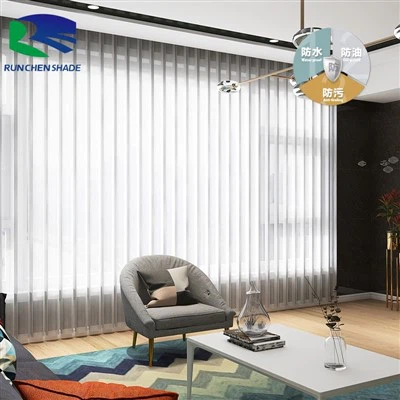
The working principle of zebra blinds is to adjust light by interlacing and overlapping two layers of fabric. Zebra blinds are composed of a layer of transparent gauze material and a layer of fabric material, which can be interlaced and overlapped with each other to create a variety of light effects. When the gauze material and the fabric material overlap, the light becomes soft and direct light is reduced; when the two are staggered, the light is completely blocked.
Specifically, the design of zebra blinds allows the fabric to roll with the axis, and the transmission of light is controlled by adjusting the degree of overlap of the fabric. When stronger light is needed, the fabric can be partially overlapped to allow some light to pass through; when a stronger shading effect is needed, the fabric can be completely staggered to achieve a full shading effect. This design makes zebra blinds very suitable for places where flexible light adjustment is required, such as bedrooms, living rooms, and offices.